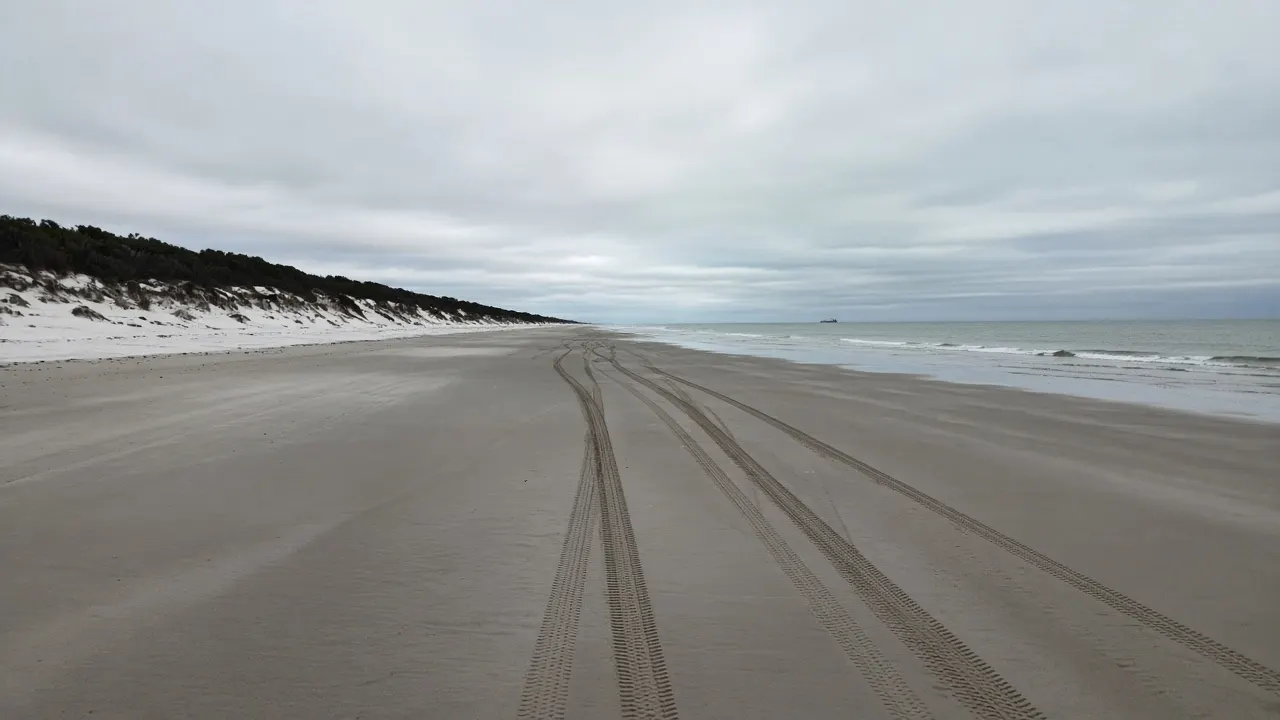
Four-wheel driving is one of the main reasons people treat Bribie as more than a suburb over a bridge. It is also the activity most likely to go wrong if you copy an old forum post. The sand is real. The recreation area is real. The cameras are real. The rules are not folklore — they are published by Queensland Parks and Wildlife Service and they change.
This page gives the planning answer, then the sequence you should follow. It does not quote permit fees, because fees are updated. It does not name hire companies. It does not tell you a track is open.
Direct answer
Yes, you can drive on Bribie Island’s ocean beach and designated recreation-area tracks if you hold a current vehicle access permit, your vehicle is a fully registered high-clearance 4WD (or 6WD) with low-range capability, and the park is open to vehicles that day. Two-wheel drives, trail bikes and motorbikes cannot get a permit and cannot enter the recreation area. Buy the permit before you arrive, keep a copy you can show, and check QPWS park alerts plus the tide. Do not treat township streets or Woorim’s flagged swim beach as a driving beach.
What “the beach” means here
QPWS describes an Ocean Beach drive along the island’s east coast: on the order of 23 kilometres one way, suggested driving time around 50 minutes, starting at the end of North Street in Woorim. The journey is the sand, the creek crossings, the freshwater lagoons behind the dunes, and, toward the north, the WWII remnants around Fort Bribie.
There is a second mental map people use: “we’ll just pop onto the beach anywhere.” That is how dunes get torn and how drivers meet a closed bank or a deep creek. Official writing tells you to stay on tracks and off the dunes. Foredunes are habitat. Shorebirds lay eggs on sand. Turtles bury eggs in sand. Your tyre is not a small thing in that landscape.
Permits: buy them first, not at the sand
A vehicle access permit must be obtained before driving on the Bribie Island Recreation Area. Queensland groups Bribie with other recreation-area islands and coasts that use the same idea: K’gari, Cooloola, and others have their own booking paths, but the principle is the same. For Bribie, the Queensland National Parks booking service is the official online channel. Over-the-counter and phone options are described on the department’s vehicle-permit pages if you cannot complete an online booking.
You must be able to produce a copy of the permit for inspection. QPWS notes that a digital copy on a phone is acceptable. Recreational use of conditionally registered vehicles is not permitted. Permits are not a casual transfer: if you hire a vehicle, the person who hired it needs to be the person who applies for that occasion’s permit. A permit that came with a recently purchased second-hand 4WD is not your permit.
This guide will not publish a dollar figure. Open the official vehicle access permit page and read the current Bribie Recreation Area fees and durations.
Cameras and why “we’ll risk it” is a poor plan
QPWS says 24-hour number-plate surveillance cameras record vehicles entering and exiting the recreation area. Registration details are checked against the booking service. A penalty infringement notice can be issued to the registered owner of a vehicle without a valid permit. The fine amount is official and it increases; look it up on the current visiting-safely page rather than memorising a blog.
The existence of cameras is not a challenge. It is the enforcement model. If you do not have a permit, do not enter.
Vehicles that belong — and vehicles that do not
Four-wheel drive or six-wheel drive vehicles with high clearance and low range are described as essential for the national park and recreation area, including the beach. All-wheel-drive vehicles without true 4WD, and low-clearance vehicles, will have difficulty on inland tracks and in soft sand. Drivers should stay in 4WD and adjust tyre pressure for sand.
Two-wheel-drive vehicles, trail bikes and motorbikes are prohibited from obtaining a permit and from entering. That sentence ends a lot of family arguments in the Woorim car park. If the only vehicle in the group is a sedan or a soft-roader, your Bribie day is a township and passage day. That is still a good day.
Where you actually enter
QPWS lists vehicle entry from the northern end of White Patch Esplanade or from the Eighth Avenue car park off North Street, Woorim. The Ocean Beach drive is described as starting at the end of North Street after you have followed signs to Woorim from the bridge.
These entries are not decorative. If you cannot find a signed recreation-area entry, you are probably still in the township and should stay on the formed road.
Tides, speed and sand manners
On Ocean Beach, travel as close to low tide as possible. QPWS advises avoiding driving three hours either side of high tide. That is a safety rule, not a vibe. Soft sand, a disappearing driving lane, and water against the dunes are how vehicles get wet and how people get stranded.
Published speed limits on the official journey page include 50 km/h on the beach unless otherwise signed, and 30 km/h on specified stretches near creeks, lagoons, the Ocean Beach camping area and inland tracks. Slow for people, birds and oncoming vehicles. The surf is loud. Assume you are not heard.
Engage 4WD before you need it. Air down for sand if that is your practice, and air up before you return to the highway. Carry recovery gear you know how to use. This guide is not a recovery manual and will not invent a “you’ll be fine in a stock dual-cab” promise.
Camping is a separate booking
Driving permission is not camping permission. Park camping on Bribie is booked through the official parks system, and facilities are deliberately low-key. There is no drinking water at camping or day-use areas. Fire rules exist and can change with bans. The northern breakaway section created by the 2022 coastal cut prohibits dogs, fires and camping.
If your picture of the trip is “drive up the beach and roll out swags wherever”, stop and read the camping pages on parks.qld.gov.au. This site will not host a bootleg campsite list.
Safety beyond the permit
Carry water. Watch children near both surf and vehicles. Prefer a fuel stove. Put fires out with water, not sand, if fires are allowed in a fire ring that day. Be aware of Lyngbya blooms in the wider bay. Read the visiting-safely page for the current wildlife and health notes rather than trusting a summarised blog.
Estuarine and marine hazards exist in Queensland waters. The park’s own safety page is the document to refresh before each trip.
Official links — use these, not a screenshot
- Bribie Island National Park and Recreation Area
- Visiting safely
- Ocean Beach drive
- Vehicle access permits
- Bribie vehicle access permit booking
If any sentence on this page disagrees with those sources tomorrow, the official page wins.
If you do not have a 4WD
You have not failed Bribie. Use beaches for Woorim and the passage. Use things to do for township walks and culture. Use getting here for the bus. Photograph the ocean from the township beach. Watch the passage change colour. That is the island most visitors actually have time for.
If you are hiring a 4WD especially for this trip, confirm that the hire contract allows recreation-area use, that you can be the permit applicant, and that you understand recovery and insurance before you air down. This site will not recommend a yard.
Heritage noise around driving
Old activity listings mentioned adventure tours and boat hire that sometimes got bundled, in people’s heads, with beach driving. They are separate. A cruise on the passage is not a permit. A golf club is not a staging area. Sandstone Point is on the other side of the water. Keep the recreation area conceptually clean: permit, vehicle, tide, alert, then sand.