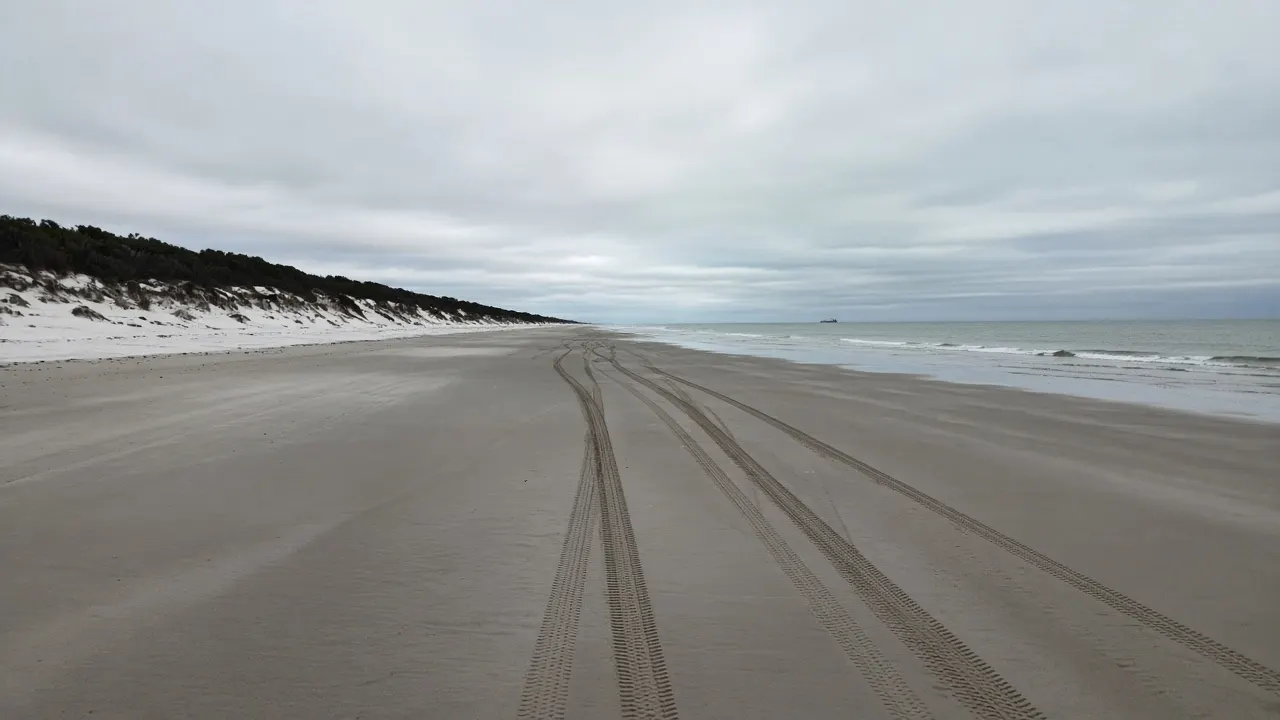
Bribie Island National Park and Recreation Area is the reason the island is more than a commuter suburb with a lucky beach. Queensland Parks and Wildlife Service describes sand dunes, heaths, paperbark wetlands, open forests, woodlands, freshwater creeks and lagoons. Around it, Moreton Bay Marine Park wraps the tidal wetlands. The recreation area, declared in 2005, is managed under the Recreation Areas Management Act 2006 and the Nature Conservation Act 1992 for conservation and nature-based recreation.
That legal mouthful has a visitor translation: you do not make the rules on the sand.
What the park is for
Official facility lists include walking, hiking, fishing, picnic tables, toilets at some sites, camping, camper trailers, and — with conditions — campfires. The tone is low-key. This is not a resort precinct. Drinking water is not supplied at camping or day-use areas. You bring what you need and you take your rubbish out.
Birdwatching is not an afterthought. Shorebirds use beaches and banks. Spring wildflowers draw people into the heath. Kangaroos appear in official photo captions at places such as Poverty Creek. None of that is a petting zoo.
Getting into the park
From the townships you approach via Woorim’s North Street / Eighth Avenue entries or via White Patch Esplanade, according to QPWS. Some areas are boat-access only. Some are 4WD only. The Ocean Beach drive is the famous 4WD spine: about 23 kilometres one way, starting at the end of North Street, high-clearance vehicle, permit required.
Read 4WD beach until it is boring. Then read the park alert. Then go, or don’t.
The 2022 breakthrough
In early 2022 a new coastal bar cut through the island about two kilometres from the northern end of the recreation area, separating the park into two sections. QPWS calls this a fragile piece of the Moreton Bay Ramsar site. Sand banks there are roosting and feeding sites for resident and migratory shorebirds. Dogs, fires and camping are prohibited on the northern breakaway section.
A special management area has also been declared over part of the national park to allow works related to erosion and breakthrough rehabilitation. That is an official management fact, not a rumour that “they’re closing Bribie”. Check what is actually closed on the day.
Cultural heritage
QPWS points to shell middens and other evidence of Aboriginal people’s traditional use, and to weathered WWII coastal-defence structures. Fort Bribie and related gun emplacements and searchlight buildings sit in the dunes toward the north of the Ocean Beach story. They are heritage remnants, not playgrounds.
This guide acknowledges Joondoburri Country and the wider Kabi Kabi / Gubbi Gubbi context as public sources describe it. It does not offer an interpretation tour.
Walking without driving the whole beach
Park material mentions Bicentennial bushwalks and inland tracks through wallum, grasstrees, banksia and paperbark wetland. Track condition is not a promise. Some walks may be reachable without the full ocean drive; others sit behind sand. Use the official journeys and alerts. Carry water even when the walk was advertised as short.
There are no wheelchair-accessible facilities on the Ocean Beach drive. Township parks are the all-abilities alternative.
Camping
Book through the official system. Sites are spread, including behind eastern dunes and on the passage. Facilities vary from almost nothing to toilets and picnic tables. Portable toilet rules exist where toilets are not provided; QPWS asks visitors not to empty chemical toilets into park toilet systems, and it names disposal points at certain areas — confirm those names on the current page.
The northern breakaway is not a wild camp. Dogs are a park rule question everywhere; they are a hard no on that section.
Looking after the place
Stay on tracks. Keep off dunes. Go slowly over seagrass in a boat. Bag hygiene products and take them home. Do not soap a creek. Obey signs that exist for both conservation and recreation. The tone of the official “looking after the park” page is not optional courtesy.
Lyngbya blooms, fire bans, and nesting seasons can all change a trip. This essay will be wrong the moment it pretends to be live.
Pair the park with the town
The park does not replace Woorim. It sits beyond it. A good Bribie trip often uses the township as a base and the park as a permitted excursion. That is healthier for the dunes and for you. Read weekend on Bribie if you are trying to hold both in two days.
When you leave, air up, take the rubbish, and do not carry sand-driving habits onto the Bruce Highway. The recreation area ends. The rules of the ordinary road begin again.
Habitats in ordinary language
Wallum heath is the low, sandy, often wet coastal heath that looks modest until it flowers. Paperbark wetlands are the tea-tree swamps that hold water and mosquitoes and birds. Open forest and woodland are the drier stands. Dunes are the engine of the east coast, and they fail when vehicles climb them for a view. Freshwater creeks and tannin lagoons are why the Ocean Beach drive is not only “beach, more beach”.
You do not need to become a botanist. You need to stay on the formed or designated line so those habitats keep doing their jobs. Official captions mention grasstrees and banksias for a reason: this is not a lawn.
Day-use without camping
QPWS photographs and facility lists mention picnic tables, barbecues at some passage-facing areas, and toilets at some sites. Fort Bribie is framed as a day-use idea as well as a ruin field. None of those sentences is a booking. They are a reminder that you can enter the park, eat food you brought, and leave before dark without rolling out a swag.
Day-use still means water in your bag and alerts in your pocket. It still means a permit if you drove there on a recreation-area track or beach. It still means the northern breakaway is not a picnic you improvise with a dog and a fire.
WWII remnants without a treasure map
The South-West Pacific war left concrete and steel on this coast. What you may see, if the drive and the dunes allow, are weathered emplacements and searchlight buildings — structures that were about defending a shipping approach, not about decorating a holiday. Climbing them is how people get hurt and how heritage gets cheaper.
This guide will not drop unofficial coordinates. If QPWS or a heritage listing describes access, use that. If a track is closed, the ruin can wait. Photographs from the sand at a respectful distance are enough of a story.
Fire, toilets, and the unglamorous rules
Where fires are allowed, they are allowed in the rings provided and not during bans. Put them out with water. Children and embers share a camp poorly. A fuel stove is the less romantic tool that fails less often.
Where toilets are not provided, QPWS asks for a portable enclosed toilet and names disposal points at certain camps — confirm those names on the current page. Do not empty chemical toilets into park toilet systems. If you must bush-toilet, the official distance and depth advice exists for water quality, not for niceness. Bag hygiene products, including nappies, and take them home.
These paragraphs are the opposite of marketing. They are why the park can stay low-key instead of becoming a mess.
Research links to keep
If this essay and those pages diverge, the pages win. Come back and tell us. The park is allowed to change. The guide has to follow.
Who this park is not for, on a given day
It is not for a 2WD that “usually copes with sand”. It is not for a trailer of bikes. It is not for a dog on the northern breakaway. It is not for a family that needs tap water and a kiosk. It is not for a drone operator who thinks empty sky means empty rules. Those people still have Bribie: the townships, Woorim’s flagged beach, the passage parks.
The park is for visitors who will read an alert, carry water, and leave the dunes alone. That group includes first-timers. Experience is not the ticket. Compliance and humility are.
After rain, after wind, after a holiday
Tracks and beach lanes change. A creek that was a puddle in a photo can be a hole on your Tuesday. Holiday weeks add more vehicles to a driving lane that also has children and birds. None of this is a reason to skip Bribie forever. It is a reason to treat the last official sentence you read as more current than this essay, which is trying to stay true without pretending to be live.